
Introduction to Sustainability: Concepts and Trends
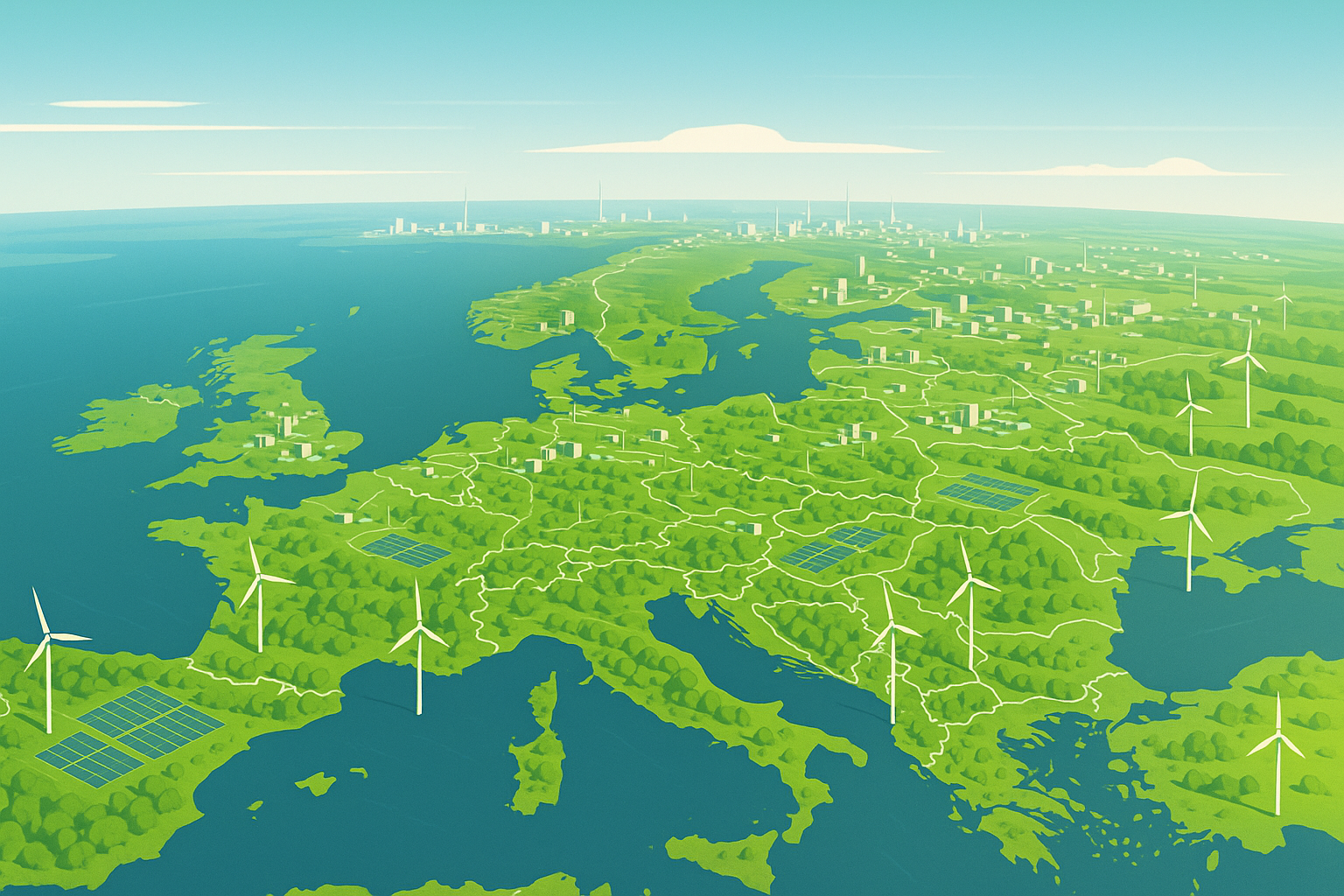
Real-world sustainability combines renewable energy, community engagement, and environmental stewardship in everyday life.
🌍 Key Takeaways
- Sustainability means meeting today's needs without compromising future generations' ability to meet theirs
- The three pillars—environmental, social, and economic—work together to create lasting change
- Sustainable living starts with small, practical choices you can make today
- The circular economy is transforming how we produce and consume
- Climate change makes sustainability not just important, but urgent
I'll be honest with you—when I first heard the word sustainability, I thought it was just another buzzword tossed around at corporate meetings and political conferences. You know, one of those terms that sounds important but feels distant from everyday life. But here's what changed my mind: I realized that sustainability isn't some abstract concept reserved for environmentalists and policymakers. It's about the future we're actively creating right now, with every choice we make.
Think about it. The coffee you drank this morning, the way you got to work, the phone in your pocket—all of these connect to a larger web of decisions about resources, energy, and impact. And that's what makes sustainability so fascinating and, frankly, so critical. It's not just about saving the planet (though that's pretty important). It's about building systems that actually work for everyone, now and in the decades to come.
So whether you're a student trying to understand sustainable development, a business owner exploring sustainable business strategies, or simply someone who wants to live more intentionally, this guide is for you. We're going to break down what sustainability really means, explore the concepts driving change today, and look at the trends shaping our collective future. No jargon. No greenwashing. Just honest, practical insights you can actually use.
What is Sustainability? Breaking Down the Basics
Let's start with the fundamentals. Sustainability is essentially about balance. The most commonly cited definition comes from the 1987 Brundtland Report, which described sustainable development as "development that meets the needs of the present without compromising the ability of future generations to meet their own needs." Simple enough, right? But the beauty—and complexity—lies in how we actually achieve that balance.
Here's where it gets interesting. Sustainability isn't just about hugging trees or recycling your plastic bottles (though both are great). It rests on three interconnected pillars that need to work in harmony:
The Three Pillars of Sustainability
Environmental sustainability is probably what first comes to mind. This pillar focuses on protecting natural resources, reducing pollution, conserving biodiversity, and addressing climate change. It's about recognizing that we live on a planet with finite resources and that our actions have consequences. When you hear about renewable energy, water conservation strategies, or efforts to reduce carbon footprint, you're looking at environmental sustainability in action.
Social sustainability addresses human wellbeing, equity, and justice. It asks uncomfortable but necessary questions: Are resources distributed fairly? Do communities have access to healthcare, education, and opportunities? Are workers treated ethically? This pillar reminds us that a truly sustainable world isn't just green—it's also just and inclusive. You can't have sustainable living if entire communities are left behind.
Economic sustainability focuses on creating systems that support long-term prosperity without depleting resources. This isn't about choosing between the economy and the environment—it's about building a green economy where financial success and ecological health reinforce each other. Think sustainable business strategies that reduce waste while increasing efficiency, or innovations that create jobs in renewable energy sectors.
Why All Three Pillars Matter
Here's the thing: you can't cherry-pick. A company that reduces emissions but exploits workers isn't sustainable. A social program that helps communities but destroys ecosystems isn't sustainable. Real sustainability requires all three pillars to support each other. It's like a three-legged stool—remove one leg, and everything collapses.
Now, you might wonder: how does this differ from sustainable development? While sustainability is the broader philosophy, sustainable development refers to the practical process of applying these principles to economic and social progress. It's the "how" to sustainability's "what." And that brings us to one of the most important frameworks guiding this work today.
Understanding Sustainable Development Goals (SDGs)
The 17 Sustainable Development Goals provide a global framework for building a sustainable future by 2030.
In 2015, the United Nations launched an ambitious blueprint for the planet: the Sustainable Development Goals (SDGs). These 17 interconnected goals serve as a universal call to action to end poverty, protect the planet, and ensure prosperity for all by 2030. I know what you're thinking—2030 is just around the corner, and we've got a lot of work to do. You're absolutely right.
But here's what makes the SDGs powerful: they're not vague aspirations. Each goal comes with specific targets and indicators. From SDG 7 (affordable and clean energy) to SDG 13 (climate action) to SDG 12 (responsible consumption and production), these goals provide a concrete framework that governments, businesses, and individuals can rally around.
Let me give you a practical example. SDG 11 focuses on sustainable cities and communities. This isn't just about green buildings and architecture—though that's part of it. It encompasses sustainable transportation options, access to green spaces, waste management systems, and inclusive urban planning. When a city invests in bike lanes, public transit, and energy-efficient housing, it's working toward this goal while simultaneously addressing climate change, improving public health, and creating economic opportunities.
The interconnected nature of the SDGs is what makes them so relevant to sustainability discussions. You can't solve climate change without addressing energy, agriculture, and consumption patterns. You can't achieve gender equality without ensuring economic opportunities and education access. Everything is linked, which is precisely why we need systemic thinking rather than isolated solutions.
Why Sustainability Matters Now More Than Ever
Look, I'm not here to hit you with doom and gloom. But we need to be real about where we stand. Climate change isn't some distant threat anymore—it's happening right now, affecting communities across Europe and around the world. We're seeing more extreme weather events, shifting agricultural zones, rising sea levels, and ecosystems under unprecedented stress. According to the European Environment Agency, Europe is warming faster than the global average, with temperatures already around 2°C above pre-industrial levels in some regions.
But here's the interesting part: this crisis has also sparked incredible innovation and creativity. The urgency of climate change has accelerated the development of environmental sustainability solutions that were once considered impossible or too expensive. Renewable energy costs have plummeted. Circular economy models are proving profitable. Sustainable agriculture methods are feeding communities while regenerating soil health.
The Business Case for Sustainability
And it's not just the right thing to do—it's increasingly the smart thing to do. Businesses that ignore sustainability are finding themselves on the wrong side of history, regulation, and consumer preference. The European Union's Green Deal, for instance, is reshaping entire industries with stricter emissions standards, sustainability reporting requirements, and incentives for green innovation.
Companies embracing sustainable business strategies are discovering competitive advantages: reduced operational costs through energy efficiency, enhanced brand reputation, better access to capital (sustainability-focused investment is booming), and improved ability to attract talent. Today's workforce, especially younger generations, wants to work for organizations that align with their values. Sustainability isn't a nice-to-have anymore—it's a business imperative.
This quote resonates with me because it captures an essential truth about sustainability: perfection is the enemy of progress. You don't need to live in a zero-waste tiny house and grow all your own food to make a difference. Small, consistent choices add up. And when millions of people make those choices—whether it's businesses adopting sustainable business strategies or individuals practicing sustainable living—the impact becomes transformative.
Sustainable Living: Practical Steps You Can Take
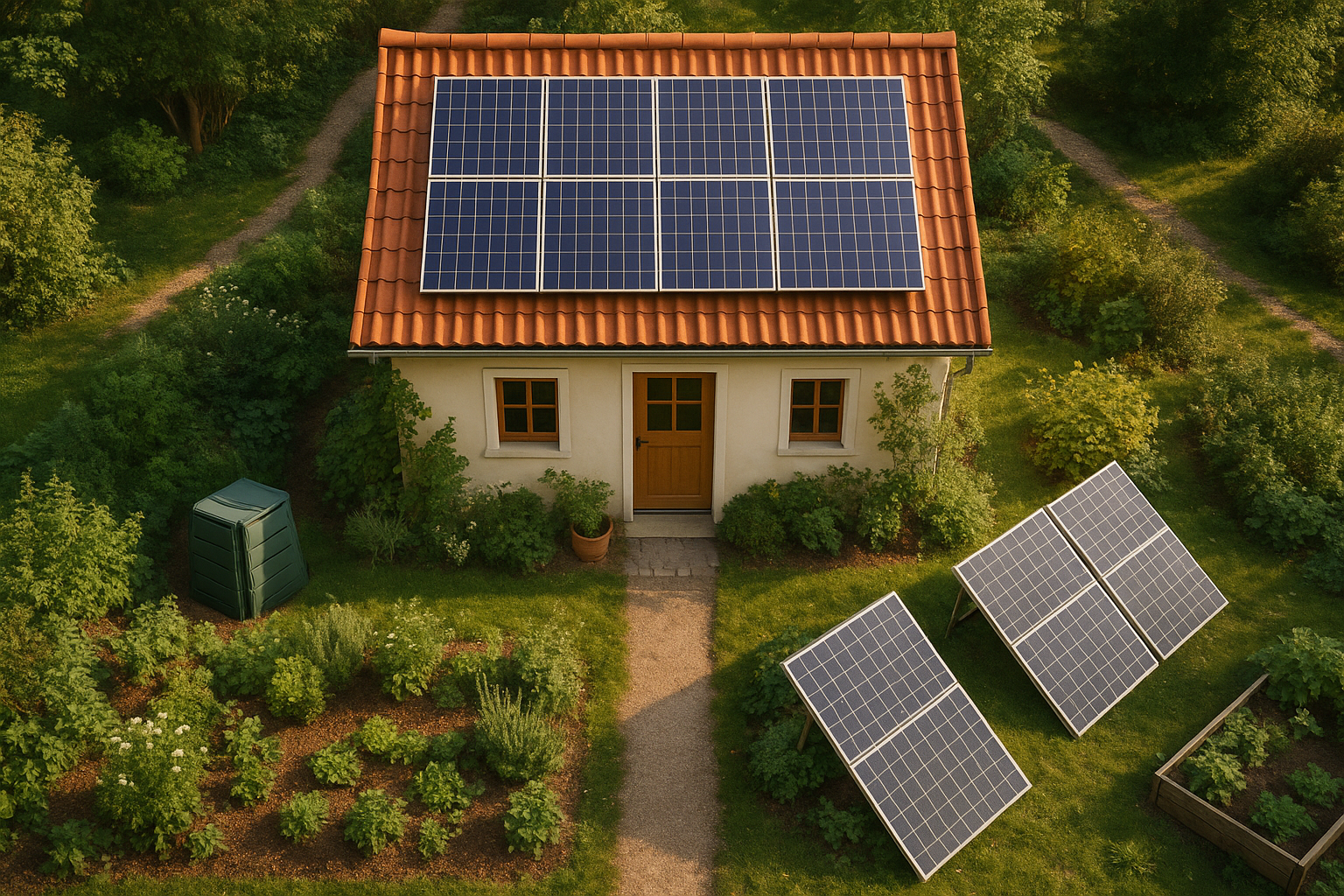
Simple changes at home—from composting to energy-efficient appliances—make sustainable living accessible and impactful.
Alright, let's get practical. Sustainable living sounds great in theory, but what does it actually look like in your daily life? The good news is that examples of sustainability practices are everywhere once you start looking. And many of them will save you money while reducing your carbon footprint. Win-win, right?
How to Reduce Waste at Home
Let's talk about waste first, because it's one of the easiest areas to tackle. The average European generates about 505 kg of municipal waste per year. That's... a lot. But here's the thing: much of that waste is entirely preventable. Start with the basics of reducing waste at home:
- Audit your trash for a week. Seriously. Before you can reduce waste, you need to know where it's coming from. You'll probably be surprised by what you find.
- Embrace reusables. Swap single-use items for reusable alternatives: water bottles, shopping bags, food containers, coffee cups. The initial investment pays for itself quickly.
- Compost organic waste. About 40% of household waste is organic material. Composting not only diverts this from landfills but creates nutrient-rich soil. Many cities now offer municipal composting programs if you don't have space for your own system.
- Buy in bulk when possible. Less packaging means less waste. Bring your own containers to stores that offer bulk bins.
- Repair, don't replace. We live in a throwaway culture, but many items can be repaired. There's a growing "right to repair" movement pushing for products designed to last and be fixed.
Tips for Eco-Friendly Living
Beyond waste, there are countless tips for eco-friendly living that integrate seamlessly into your routine:
Energy efficiency is huge. Switch to LED bulbs (they use 75% less energy than incandescent), unplug devices when not in use (phantom energy consumption is real), and consider a smart thermostat that optimizes heating and cooling. In Germany, for instance, heating accounts for about 70% of household energy use. Even turning down the thermostat by just 1°C can reduce energy consumption by 6%.
Water conservation strategies matter more than many people realize. Install low-flow showerheads, fix leaky faucets promptly (a dripping tap can waste 20,000 liters per year), run dishwashers and washing machines only when full, and collect rainwater for plants. In areas facing increasing water stress due to climate change, these practices aren't just environmentally responsible—they're becoming necessary.
Transportation choices significantly impact your carbon footprint. Consider sustainable transportation options like biking, walking, public transit, or carpooling. If you're in the market for a vehicle, electric options are becoming increasingly viable, with charging infrastructure expanding rapidly across Europe. But honestly? The most sustainable trip is often the one you don't take. Remote work, when possible, eliminates commuting emissions entirely.
Food choices have a bigger environmental impact than most people realize. You don't have to go vegetarian or vegan (though reducing meat consumption helps), but being mindful matters. Buy local and seasonal produce when possible, reduce food waste by planning meals and storing food properly, and consider supporting sustainable agriculture methods by choosing organic or regeneratively farmed products when your budget allows.
The Power of Incremental Change
Here's my advice: don't try to change everything at once. Pick one or two areas that feel manageable and start there. Maybe this month you focus on reducing waste at home by eliminating single-use plastics. Next month, you optimize your energy use. These examples of sustainability practices compound over time. And as these behaviors become habits, you'll find that sustainable living doesn't feel like sacrifice—it feels like common sense.
The Circular Economy: Rethinking Production and Consumption
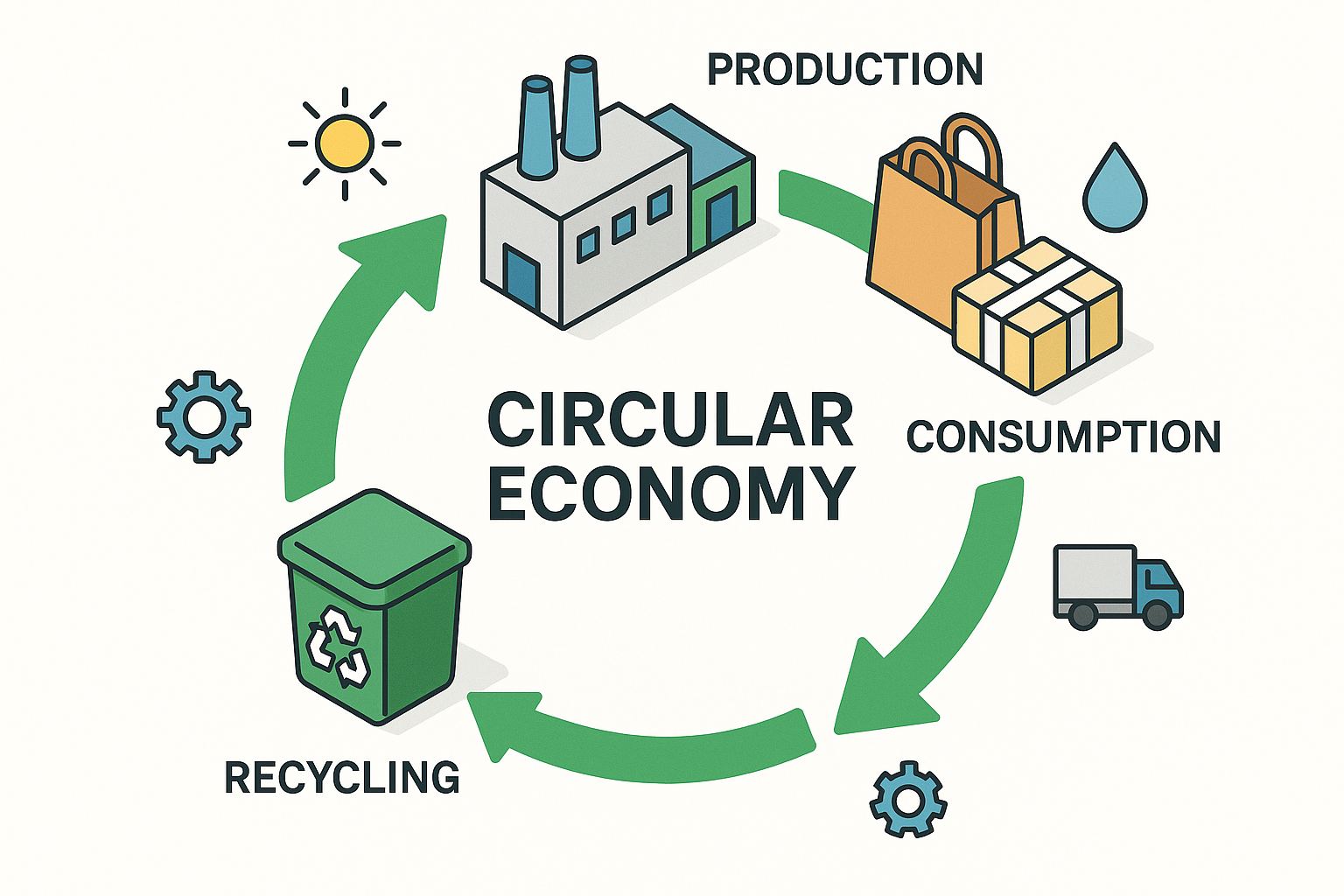
The circular economy transforms traditional linear consumption into a regenerative system that minimizes waste and maximizes resource efficiency.
Now let's talk about something that's revolutionizing how we think about sustainability: the circular economy. If you haven't encountered this concept yet, prepare to have your mind slightly blown. It's one of those ideas that seems obvious once you understand it, yet it challenges fundamental assumptions about how our economy works.
For centuries, we've operated on a linear economic model: take resources, make products, use them, throw them away. Take, make, waste. This approach made sense (sort of) when we thought resources were infinite and the planet could absorb endless waste. Spoiler alert: neither assumption was correct. The circular economy flips this model entirely.
From Linear to Circular: A Paradigm Shift
In a circular economy, waste is designed out of the system from the start. Products are created to be durable, repairable, and ultimately recyclable or compostable. Materials circulate through the economy rather than being used once and discarded. It's inspired by natural ecosystems, where there's no such thing as waste—everything is food for something else.
This isn't just theoretical. The European Union has embraced the circular economy as a cornerstone of its sustainability strategy, with the Circular Economy Action Plan setting ambitious targets for reducing waste, increasing recycling rates, and promoting sustainable product design. And it's creating real economic opportunities—the Ellen MacArthur Foundation estimates that transitioning to a circular economy could generate €1.8 trillion in economic benefits for Europe by 2030.
So what does this look like in practice? Think about companies like Patagonia, which repairs clothing and resells used items through its Worn Wear program. Or Philips, which offers "lighting as a service," retaining ownership of lighting systems and taking responsibility for maintenance and eventual recycling. Or the growing number of businesses built entirely on circular economy principles—from furniture rental services to companies that turn ocean plastic into consumer products.
Key Principles of the Circular Economy
- Design for longevity: Products built to last, with modular designs that allow for easy repair and upgrading
- Sharing and service models: Why own something you use occasionally when you can share it or pay for access? Car-sharing, tool libraries, and clothing rental are examples
- Remanufacturing and refurbishing: Giving products new life through professional restoration
- Recycling done right: Not as a last resort, but designed into products from the beginning
- Regenerative practices: Going beyond "less bad" to actively restoring natural systems, especially in agriculture
The circular economy represents a fundamental shift in how businesses operate and how we consume. It requires collaboration across supply chains, innovation in materials and design, and new business models. But it also offers a path toward genuine sustainability—economic prosperity that doesn't depend on depleting resources or generating waste.
Renewable Energy: Powering a Sustainable Future
Let's talk about one of the most visible and impactful aspects of the sustainability transition: renewable energy. If you've driven through parts of Europe recently, you've probably noticed wind turbines dotting landscapes and solar panels covering rooftops. This isn't just aesthetic change—it represents a fundamental transformation in how we power our societies.
The shift to renewable energy is accelerating faster than most experts predicted. According to the International Energy Agency, renewable electricity capacity additions broke records in recent years, with solar leading the charge. And this isn't happening despite economics—it's happening because of economics. In many places, building new renewable energy infrastructure is now cheaper than operating existing fossil fuel plants.
Benefits of Renewable Energy Adoption
The benefits of renewable energy adoption extend far beyond reducing greenhouse gas emissions (though that's obviously crucial for addressing climate change). Let's break down why this transition matters:
Energy security and independence: Countries that invest in domestic renewable energy become less dependent on imported fossil fuels, which improves energy security and insulates economies from global fuel price volatility. Germany's Energiewende (energy transition) exemplifies this strategy, though it's not without challenges.
Economic opportunity: The renewable energy sector is a massive job creator. The International Renewable Energy Agency reports that renewable energy employed 12.7 million people globally in 2021, with that number expected to grow substantially. These aren't just installation jobs—they include manufacturing, research and development, maintenance, and service roles.
Health benefits: Fossil fuel combustion creates air pollution that contributes to respiratory diseases, cardiovascular problems, and premature deaths. Transitioning to renewable energy directly improves public health, with healthcare cost savings that often exceed the investment required for the energy transition.
Distributed generation: Unlike large centralized power plants, renewable energy can be deployed at various scales, from utility-scale wind farms to rooftop solar panels. This democratizes energy production and can increase grid resilience.
The Integration Challenge
Now, I won't pretend the transition is simple. Renewable energy sources like wind and solar are variable—the sun doesn't always shine, and the wind doesn't always blow. This requires innovation in energy storage, grid management, and demand flexibility. But these are engineering challenges with engineering solutions, and progress is happening rapidly. Battery storage costs have fallen by 90% over the past decade, making grid-scale storage increasingly viable.
The European Union has set ambitious targets: at least 42.5% of final energy consumption from renewables by 2030, with an aspiration to reach 45%. Individual countries are going further—Denmark aims for 100% renewable electricity, while Spain is phasing out coal entirely. These aren't pie-in-the-sky dreams; they're backed by policy frameworks, investment commitments, and technological roadmaps.
For individuals, participating in the renewable energy transition is becoming easier. Depending on where you live, you might install solar panels, join a community solar project, or simply choose an energy supplier that sources from renewables. As the infrastructure expands and costs continue to fall, these options become accessible to more people. And that's the point—sustainability can't be only for the wealthy. It needs to work for everyone.
Sustainable Business: Corporate Responsibility in Action
Here's something that might surprise you: businesses are increasingly driving sustainability forward, not because they're suddenly filled with environmental altruism, but because it makes financial sense. I know, I know—corporate motives are rarely pure. But here's the thing: when business incentives align with sustainability goals, powerful things happen. The green economy isn't just growing—it's becoming mainstream.
Why Sustainable Business Strategies Matter
Companies that implement sustainable business strategies are finding competitive advantages across multiple dimensions. Let me walk you through what this actually means in practice, because