
GRI Standards: Your Complete Guide to Sustainability Reporting
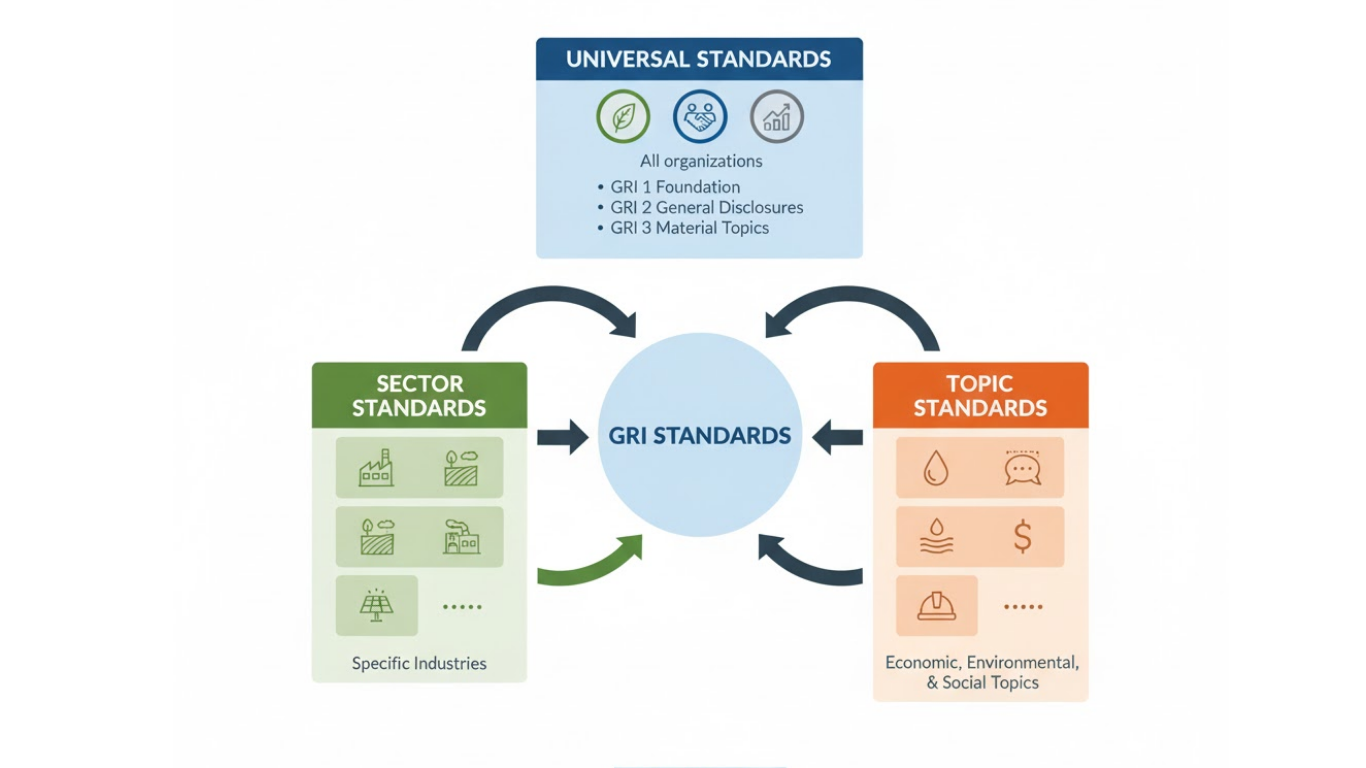
The comprehensive GRI Standards framework provides a structured approach to sustainability disclosure for organizations worldwide.
Key Takeaways
- GRI Standards are the world's most widely used framework for sustainability reporting
- Three series of standards—Universal, Sector, and Topic—work together for comprehensive disclosure
- Materiality assessment is central to identifying what matters most to your organization
- GRI Standards align closely with CSRD and ESRS requirements in Europe
- Reporting "in accordance with" GRI demonstrates credibility and commitment to transparency
Sustainability reporting used to be optional—a nice-to-have for companies wanting to polish their image. But here's the thing: those days are over. Between stricter EU regulations, investor demands, and consumers who actually care where their money goes, sustainability reporting has become essential. And if you're going to do it, you need to speak the language that stakeholders understand. That's where the GRI Standards come in.[1][2]
The Global Reporting Initiative (GRI) created these standards to bring order to the chaos of sustainability disclosure. Think of them as the common language of ESG reporting—used by thousands of organizations across more than 100 countries. Whether you're a startup in Berlin or a multinational corporation, the GRI Standards provide a structured, credible way to communicate your environmental, social, and economic impacts.[2][3]
Now, I won't pretend that diving into GRI reporting feels simple at first. There are multiple standards, technical requirements, and a materiality assessment process that demands real thought. But here's what I've learned: once you understand the framework, it becomes less about compliance checkboxes and more about genuinely understanding your organization's impact. And that's powerful.[4]
What are the GRI Standards?
Let's start with the fundamentals. The GRI Standards are a set of internationally recognized guidelines for sustainability reporting. They help organizations understand and communicate their impacts on critical issues like climate change, human rights, governance, and social wellbeing. The beauty of GRI is that it's designed to be universal—applicable to any organization, regardless of size, sector, or location.[2][6]
What makes GRI Standards different from other frameworks? First, they're free and publicly available. Second, they're developed through a multi-stakeholder process involving businesses, civil society, labor organizations, and investors. This means they balance different perspectives rather than serving one narrow interest. Third, they're designed around the concept of double materiality—reporting not just how sustainability issues affect your business, but how your business affects the world.[7][10]
The latest version, launched in 2021, represents a significant update. The GRI Universal Standards 2021 introduced clearer requirements around human rights due diligence, stakeholder engagement, and materiality assessment. They also eliminated the old "Core" and "Comprehensive" options, replacing them with a single "in accordance with" approach that ensures more consistent, comparable reporting.[21][23][24]
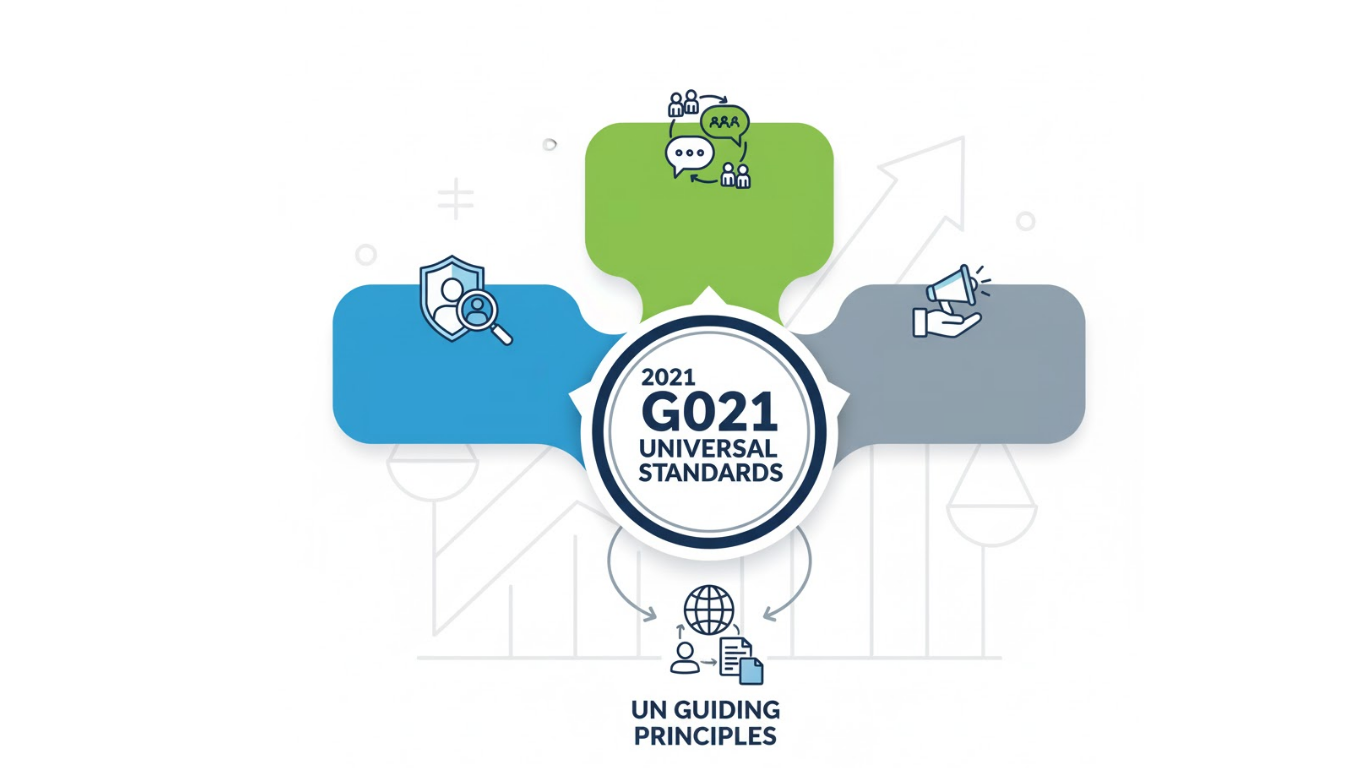
The 2021 GRI Standards update strengthened requirements for human rights, stakeholder engagement, and materiality assessment.
Who Can Use the GRI Standards?
Short answer? Anyone. The GRI Standards are designed to be universally applicable. I've seen them used by Fortune 500 corporations, family-owned businesses, non-profits, government agencies, and even universities. There's no minimum size requirement, no sector restrictions, and no geographic limitations.[2][4][19]
This flexibility is intentional. Whether you're a mining company in Sweden, a tech startup in Portugal, or an agricultural cooperative in Greece, the standards provide a framework that adapts to your specific context. The key is applying them honestly and thoroughly, not just cherry-picking the parts that make you look good.[19]
Getting Started with GRI
If you're new to GRI reporting, the good news is that the standards are freely downloadable from the Global Reporting Initiative website. You'll find detailed guidance, FAQs, and implementation resources. Many organizations also work with sustainability consultants to navigate their first report, though it's entirely possible to do it in-house with the right commitment and expertise.[18][22]
The Three Series of GRI Standards
Here's where the structure becomes clear. The GRI Standards are organized into three distinct series, each serving a specific purpose. Understanding this architecture is essential for effective reporting.[4][6][7]
Universal Standards: The Foundation
Every organization using GRI Standards must apply the Universal Standards. These consist of three components:[21][22]
- GRI 1: Foundation – Sets out the fundamental concepts and principles for sustainability reporting. This is your rulebook, explaining how to use the standards and what "reporting in accordance" actually means.[22]
- GRI 2: General Disclosures – Requires information about your organization's reporting practices, activities, workers, governance, and strategy. Think of this as the "who you are" section.[21][24]
- GRI 3: Material Topics – Guides the process of identifying material topics and how to report on them. This is where materiality assessment comes into play.[21][24]
Sector Standards: Industry-Specific Guidance
The GRI Sector Standards provide tailored guidance for specific industries. Currently, GRI has developed sector standards for oil and gas, coal, agriculture, aquaculture and fishing, and mining. More are in development. These standards help you identify the topics that are likely material in your sector, though you still need to conduct your own assessment.[16][27]
Why do sectors matter? Because a mining company's material issues differ dramatically from those of a software company. Sector standards ensure you're not missing critical topics that affect your industry specifically.[6][27]
Topic Standards: Issue-Specific Reporting
The GRI Topic Standards cover specific sustainability issues like GHG emissions, water and effluents, waste, employment, diversity, anti-corruption, and economic performance. You select and apply the Topic Standards that align with your material topics. There are currently over 30 Topic Standards covering environmental, social, and economic themes.[21][24]
| Standard Type | Purpose | Application |
|---|---|---|
| Universal (GRI 1, 2, 3) | Foundation, general disclosures, materiality process | Required for all organizations[21][22] |
| Sector Standards | Industry-specific material topics and guidance | Applied if available for your sector[16][27] |
| Topic Standards | Specific sustainability issues (emissions, labor, etc.) | Applied based on materiality assessment[21][24] |
How Organizations Apply the GRI Universal Standards
Let's get practical. Applying the GRI Universal Standards isn't something you do in an afternoon. It requires cross-functional collaboration, data gathering, and strategic thinking. But the process is logical once you break it down.[6][7][10]
Start with GRI 1: Foundation. This standard explains the reporting principles you must follow: accuracy, balance, clarity, comparability, completeness, sustainability context, timeliness, and verifiability. These aren't just nice-to-haves—they're requirements for credible reporting.[22]
Next comes GRI 2: General Disclosures. You'll report on your organization's details (name, location, ownership structure), your activities and workers, governance structure, and strategy and policies. This section establishes transparency about who you are and how you operate. It includes disclosures about your value chain, stakeholder engagement approach, and external initiatives you participate in.[21][24]
The most challenging—and important—part is GRI 3: Material Topics. This requires conducting a materiality assessment to identify the sustainability topics that are most significant for your organization and stakeholders. We'll dive deeper into this process shortly, but know that it's the cornerstone of GRI reporting. Get this wrong, and your entire report risks missing the mark.[10][28]
The Reporting Timeline
Most organizations report on an annual cycle, aligning with their financial reporting period. However, GRI doesn't mandate a specific frequency—you determine what's appropriate for your organization. What matters is consistency and regular updates so stakeholders can track your progress over time.[18]
What is the Role of Sector and Topic Standards in GRI Reporting?
Think of Sector Standards as your starting point for identifying material topics. If GRI has published a Sector Standard for your industry, it provides a baseline of topics that are commonly material in that sector. For example, the GRI Standards for the mining sector highlight issues like waste and hazardous materials management, biodiversity, rights of indigenous peoples, and local communities.[6][16][27]
But here's the important part: Sector Standards don't replace your materiality assessment. They inform it. You still need to evaluate which topics are material for your specific organization, considering your activities, impacts, and stakeholder concerns. Some sector-level material topics might not be significant for your particular operations, and you might identify material topics beyond what the sector standard covers.[6][10][27]
Topic Standards, meanwhile, tell you how to report on each material topic. Let's say your materiality assessment identifies GHG emissions as material. You'd then apply GRI 305: Emissions, which specifies what data to disclose (Scope 1, 2, and 3 emissions, intensity ratios, reduction initiatives, etc.) and how to report it (methodologies, standards used, boundaries).[24]
Each Topic Standard includes management approach disclosures (how you manage the topic) and topic-specific disclosures (quantitative and qualitative data). This structure ensures reporting goes beyond numbers to explain your strategy, policies, and actions.[10][24]
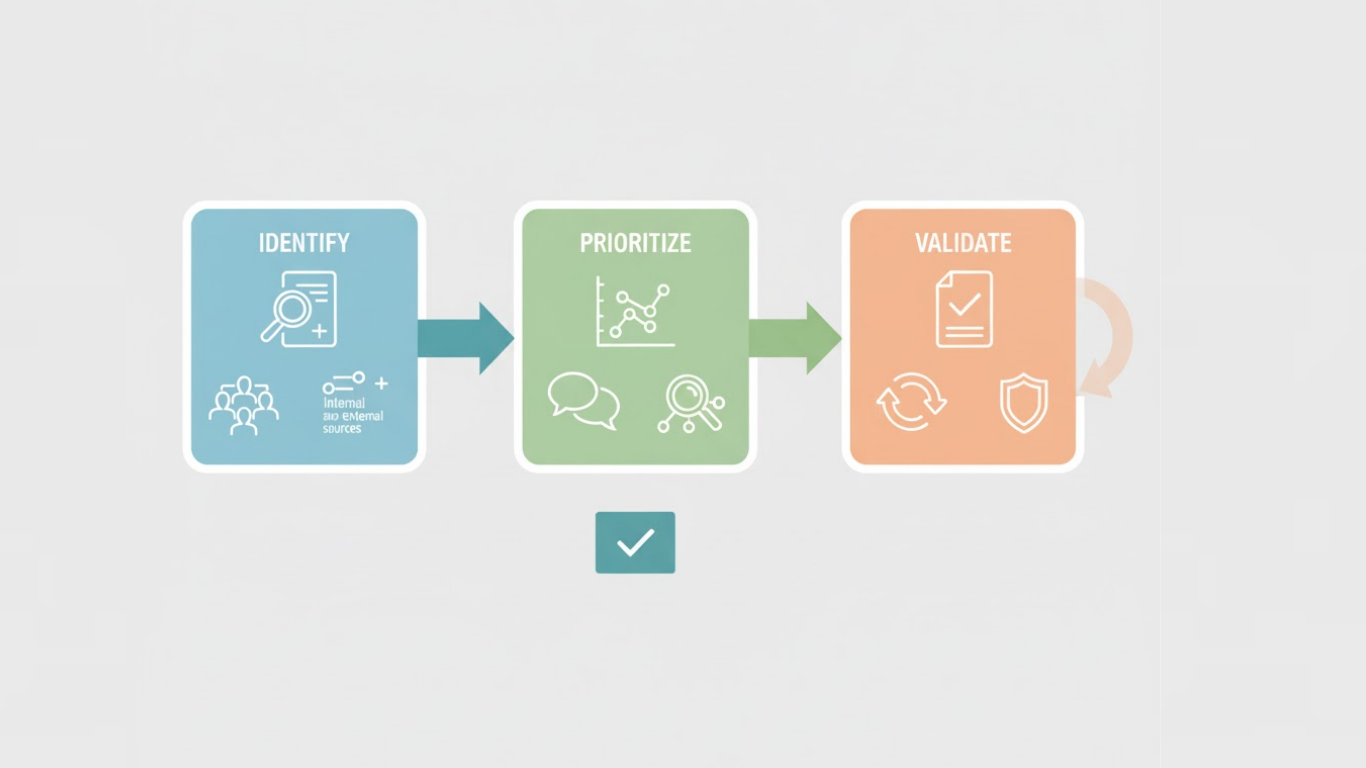
A robust materiality assessment is the foundation of meaningful GRI reporting, identifying what matters most to your organization and stakeholders.
How Do Organizations Determine Material Topics for Reporting?
Now we're getting to the heart of GRI reporting: the materiality assessment. This isn't a box-ticking exercise—it's a strategic process that shapes your entire sustainability approach. Done well, it reveals insights that inform decision-making far beyond your sustainability report.[10][28]
The 2021 GRI update refined the materiality concept around impact materiality. This means identifying topics where your organization has significant impacts—positive or negative, actual or potential—on the economy, environment, and people, including human rights. Notice the focus on outward impacts, not just inward risks to your business.[10][23][25]
The Materiality Assessment Process
GRI outlines a clear process for determining material topics. You start by understanding your organization's context—mapping your activities, business relationships, and stakeholders. Then you identify all actual and potential impacts across environmental, social, and economic dimensions, considering both your direct operations and your value chain. Next comes assessing the significance of each impact based on severity and likelihood. Finally, you prioritize the most significant impacts for reporting, informed by stakeholder engagement and your impact on sustainable development.[10][25][28]
A critical element is stakeholder engagement. You can't determine materiality in a vacuum. You need input from people affected by your activities: employees, local communities, customers, suppliers, investors, civil society organizations. Their perspectives often reveal impacts you might not have considered.[10][28]
One thing I've noticed: organizations new to materiality assessment often struggle with the shift from risk-focused thinking to impact-focused thinking. It's not just "What sustainability issues affect our business?" but rather "How does our business affect sustainability?" That subtle shift changes everything.[25][28]
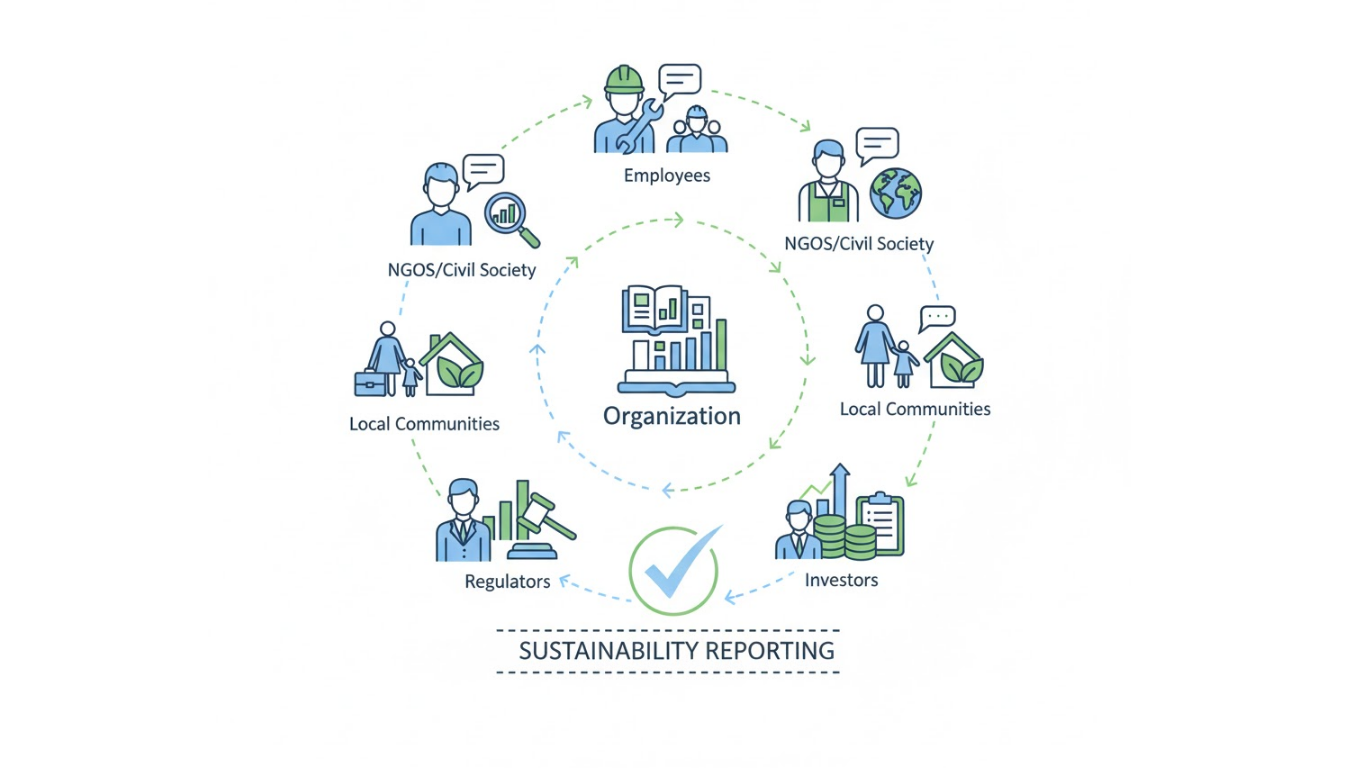
Meaningful stakeholder engagement is essential for identifying material topics and understanding your organization's true impacts.
What Does It Mean to Report "In Accordance With" the GRI Standards?
Here's where credibility comes into play. Many organizations reference GRI or report on selected GRI indicators. But only those that meet specific requirements can claim to report "in accordance with the GRI Standards." This designation signals comprehensive, rigorous reporting.[4][10]
To report in accordance with the GRI Standards, you must apply GRI 1 Foundation following all reporting principles, report all disclosures in GRI 2 General Disclosures and GRI 3 Material Topics, report disclosures from GRI Topic Standards for each material topic identified, provide a GRI content index listing all disclosures, provide a statement of use, and notify GRI of your report via the GRI Data Platform.[10][23]
If you can't report a required disclosure, you must explain why in what's called "omissions." Transparency includes being honest about gaps or limitations in your reporting. Stakeholders respect honesty far more than greenwashed perfection.[10]
The 2021 update simplified this by eliminating the previous "Core" and "Comprehensive" options. Now there's one standard for reporting in accordance, making it clearer what's required and improving comparability across organizations.[23][24]
The GRI Content Index
Think of the GRI content index as your report's navigation system. It lists every disclosure you've reported, where to find it (page numbers or section references), and any omissions with explanations. It's required for "in accordance" reporting and makes your report far more accessible to readers looking for specific information.[10][17]
How Are GRI Standards Developed and Updated?
One reason the GRI Standards maintain credibility is their development process. GRI doesn't create standards in isolation—they're developed through a formal, transparent, multi-stakeholder process overseen by an independent body called the Due Process Oversight Committee.[4][27]
When GRI develops a new standard or updates an existing one, the process includes extensive consultation. Draft standards are published for public comment, allowing organizations, experts, and affected stakeholders worldwide to provide input. This feedback shapes the final version. It's not fast—developing a sector standard can take 18-24 months—but it ensures the standards reflect diverse perspectives and real-world needs.[27]
The 2021 update of the Universal Standards, for example, incorporated feedback from thousands of stakeholders across more than 40 countries. Major changes included strengthening human rights due diligence requirements, clarifying materiality concepts, and improving guidance on value chain reporting—all responding to feedback and evolving global expectations.[21][23]
GRI also works closely with other standard-setters. There's ongoing dialogue with the International Sustainability Standards Board (ISSB), the European Financial Reporting Advisory Group (EFRAG), and others to ensure interoperability and reduce reporting burden. This collaboration is critical as sustainability reporting becomes increasingly regulated.[9][26][29]
How Can Organizations Register a GRI Standards-based Report?
Once your report is ready, registering it with GRI is straightforward—and important for visibility and credibility. Organizations reporting in accordance with the GRI Standards must notify GRI using the GRI Data Platform.[18]
Registration serves several purposes. It makes your report discoverable in GRI's Sustainability Disclosure Database, which investors, researchers, and other stakeholders use to find sustainability information. It also demonstrates commitment to transparency by making your report publicly available.[17][18]
The process is digital and user-friendly. You'll provide basic information about your organization and report, upload the report or provide a URL, and submit your GRI content index data. There's no fee for registration, though GRI does offer paid services for organizations wanting additional visibility or data management tools.[18]
How Do GRI Standards Align with Other Sustainability Reporting Frameworks?
If you're operating in Europe, you've probably heard a lot about the Corporate Sustainability Reporting Directive (CSRD) and the European Sustainability Reporting Standards (ESRS). The big question: how does GRI fit with these new requirements?[8][9][26]
Good news: there's significant alignment. GRI and EFRAG (which developed the ESRS) worked closely together during the ESRS development process. Both frameworks are grounded in double materiality, both require comprehensive stakeholder engagement, and both focus on impacts across the value chain.[26][29]
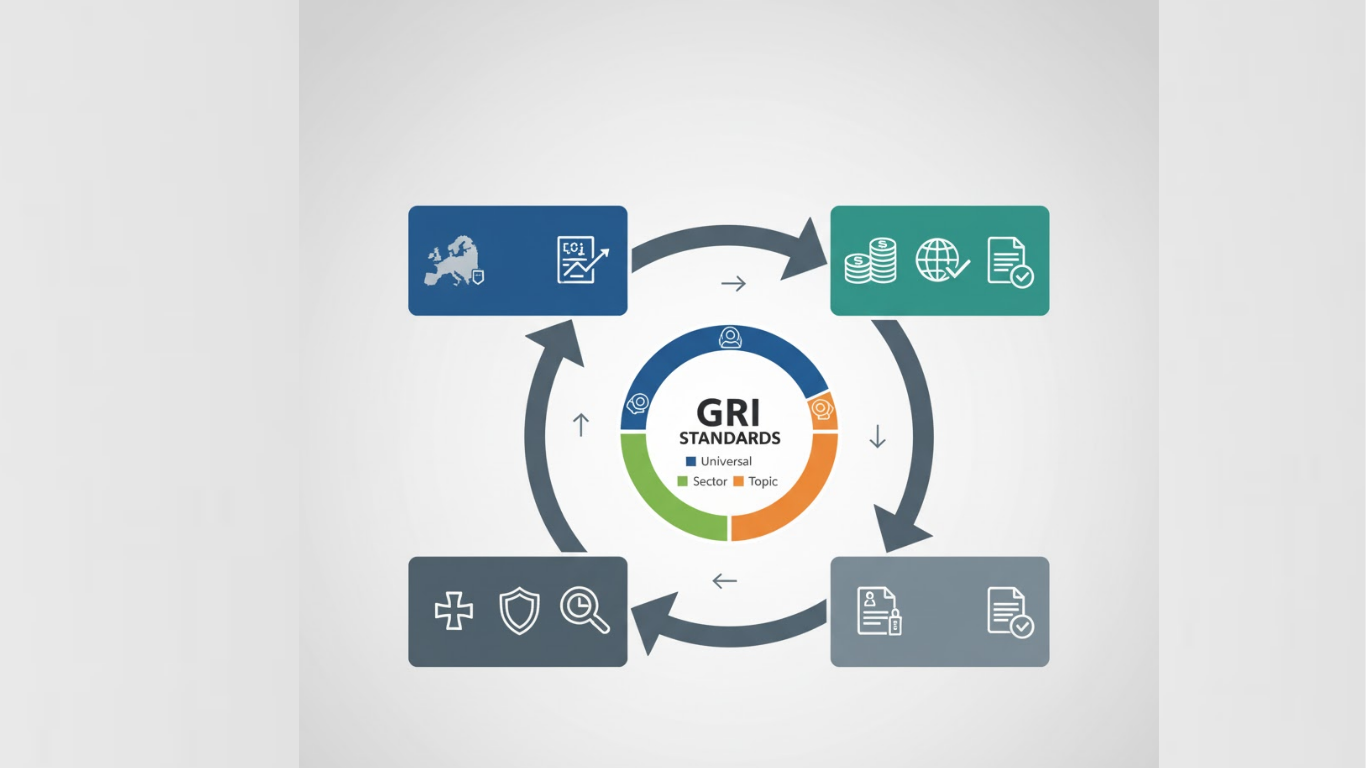
GRI Standards align closely with major European and international reporting frameworks, enabling efficient compliance and comprehensive disclosure.
In fact, many organizations use the GRI Standards as the foundation for meeting CSRD requirements. You'll need to include additional ESRS-specific disclosures, but much of the work overlaps. GRI and EFRAG have published joint resources, including an interoperability index that maps GRI disclosures to ESRS requirements.[12][15][26]
Framework Alignment at a Glance
| Framework | Alignment with GRI | Key Differences |
|---|---|---|
| CSRD/ESRS | High – Strong overlap in concepts, materiality approach, and many disclosures[12][26] | ESRS includes more prescriptive requirements for EU companies; mandatory for certain organizations[29] |
| ISSB Standards | Medium-High – Complementary focus; ISSB emphasizes enterprise value, GRI emphasizes impact[29] | ISSB primarily for investors; GRI for broader stakeholders[29] |
| SASB Standards | Medium – Some topic overlap, especially in sector-specific issues[29] | SASB focuses on financially material topics for investors; GRI broader impact focus[29] |
| TCFD | High on climate – GRI 201 and related standards align with TCFD structure[29] | TCFD exclusively focused on climate-related financial disclosures[29] |
What does this mean practically? If you're already reporting with GRI Standards, you've got a solid foundation for compliance with European regulations. You're not starting from scratch—you're building on existing work. That said, CSRD compliance requires additional specific disclosures, so you'll want to carefully map requirements and fill any gaps.[26][29]
Benefits of Reporting with GRI Standards
Let's be honest: sustainability reporting takes time, resources, and commitment. So why do thousands of organizations worldwide use the GRI Standards? Because the benefits are real and measurable.[4][6][29]
Enhanced credibility and trust – Stakeholders recognize GRI as rigorous and comprehensive. Reporting in accordance signals that you're serious about transparency, not just greenwashing. This matters increasingly to investors, customers, employees, and regulators.[4][6]
Regulatory preparedness – With CSRD making sustainability reporting mandatory for thousands of EU companies, familiarity with GRI positions you well for compliance. The concepts, processes, and data systems you develop translate directly to regulatory requirements.[12][26][29]
Improved internal management – The materiality assessment and data gathering process reveal insights about your operations, risks, and opportunities. Many organizations find that sustainability reporting improves decision-making and operational efficiency.[29]
Stakeholder engagement – The GRI framework requires meaningful engagement with people affected by your activities. This builds relationships, identifies concerns early, and demonstrates respect for stakeholder perspectives.[28]
Competitive advantage – As sustainability performance influences purchasing decisions, investment allocation, and talent attraction, transparent reporting becomes a differentiator. Organizations that communicate their impacts clearly stand out.[29]
Contributing to sustainable development – Perhaps most importantly, GRI reporting connects your organization to broader sustainability goals like the SDGs. It's not just about compliance—it's about understanding and improving your contribution to a sustainable future.[29]
References and Sources
- Global Reporting Initiative. "GRI Standards German Translations." GRI, October 2024.
- Global Reporting Initiative. "GRI Standards." GRI, October 2025.
- DFGE. "GRI Global Reporting Initiative - Optimise Your CSR Strategy." DFGE, February 2025.
- First Climate. "GRI-Standard – Nachhaltigkeitsberichte transparent." First Climate, 2019.
- Global Reporting Initiative. "A Short Introduction to the GRI Standards." GRI, 2024.
- Sunhat. "GRI Standards: The Basics of the Global Reporting Initiative." Sunhat, November 2024.
- Workiva Carbon. "GRI Standards and Reporting | GRI Explained." Workiva, November 2023.
- Linklaters. "Key Sustainability Disclosure Regimes: GRI Standards." Linklaters, August 2025.
- Global Reporting Initiative. "EU Omnibus and the CSRD: Key Questions Answered." GRI, April 2025.
- Global Reporting Initiative. "GRI Universal Standards 2021 - Public FAQs." GRI, 2021.
- Cross Relations. "GRI Standards: Same Same But Different." Cross Relations, 2025.
- Iris Carbon. "Meeting EU Reporting Needs with GRI Standards." Iris Carbon, July 2025.
- Eevery. "The Global Reporting Initiative (GRI) Explained." Eevery, 2019.
- GIZ. "GRI Content Index | Integrated Company Report GIZ." GIZ, 2023.
- Global Reporting Initiative. "Key Questions on the CSRD and GRI - Sustainability Reporting in Europe." GRI, 2025.
- Global Reporting Initiative. "Sector Program." GRI, November 2023.
- Deutsche Bahn. "Global Reporting Initiative (GRI) Index." Deutsche Bahn, 2023.
- Global Reporting Initiative. "How to Use the GRI Standards." GRI, September 2025.
- Sedex. "Understanding Global Reporting Initiative (GRI) Standards." Sedex, February 2025.
- Daato. "What is GRI and How to Use It." Daato, March 2024.
- KPMG. "Revised System of the GRI Standards." KPMG, July 2024.
- Global Reporting Initiative. "Universal Standards." GRI, October 2024.
- Labrador Transparency. "What You Need to Know About the Updated 2021 GRI Standards." Labrador, May 2025.
- Flagship Impact. "What's in the Latest GRI Standards?" Flagship, May 2025.
- CSR Tools. "How to Create a CSRD-compliant Materiality Assessment in 4 Steps." CSR Tools, August 2025.
- Ecobiomanager. "GRI Reporting Initiative and EU ESG and CSRD Reporting." Ecobiomanager, October 2025.
- Global Reporting Initiative. "Standards Development." GRI, October 2024.
- Sustainability Economics. "Conducting a Materiality Assessment Following GRI and ESRS Guidances." Sustainability Economics, July 2023.
- Nexio Projects. "How to Navigate the Latest GRI Standards in 2025." Nexio, October 2025.