

Regulation blinked in 2025, but the market didn’t. Procurement portals, marketplaces, and courts already expect defendable environmental claims. This playbook helps you stand up a credible program in 30–60 days—regardless of the Directive’s future.
Where things stand: Green Claims Directive paused status
The EU Green Claims Directive was designed to stop greenwashing by requiring businesses to substantiate explicit environmental statements. In June 2025, the European Commission announced its intention to withdraw the proposal, effectively pausing progress. Politics aside, expectations from buyers and regulators continue to rise. The smart move now is to operationalize the substance of the draft: evidence, verification, and clear disclosure.
Meanwhile, the ECGT Directive (Empowering Consumers for the Green Transition, in force since March 2024) already prohibits generic, unsubstantiated green claims and misleading sustainability badges. Think of ECGT as the floor you must meet; this playbook shows how to exceed it.
What the Directive would have required (still good practice)
The proposal focused on environmental claims substantiation with a lifecycle perspective and third-party verification environmental claims. It covered explicit statements (“made with recycled content”), implied/visual claims (imagery that suggests benefits), generic terms, comparative claims, and “improvement over time.”
| Claim type (examples) | Minimum evidence you should prepare |
|---|---|
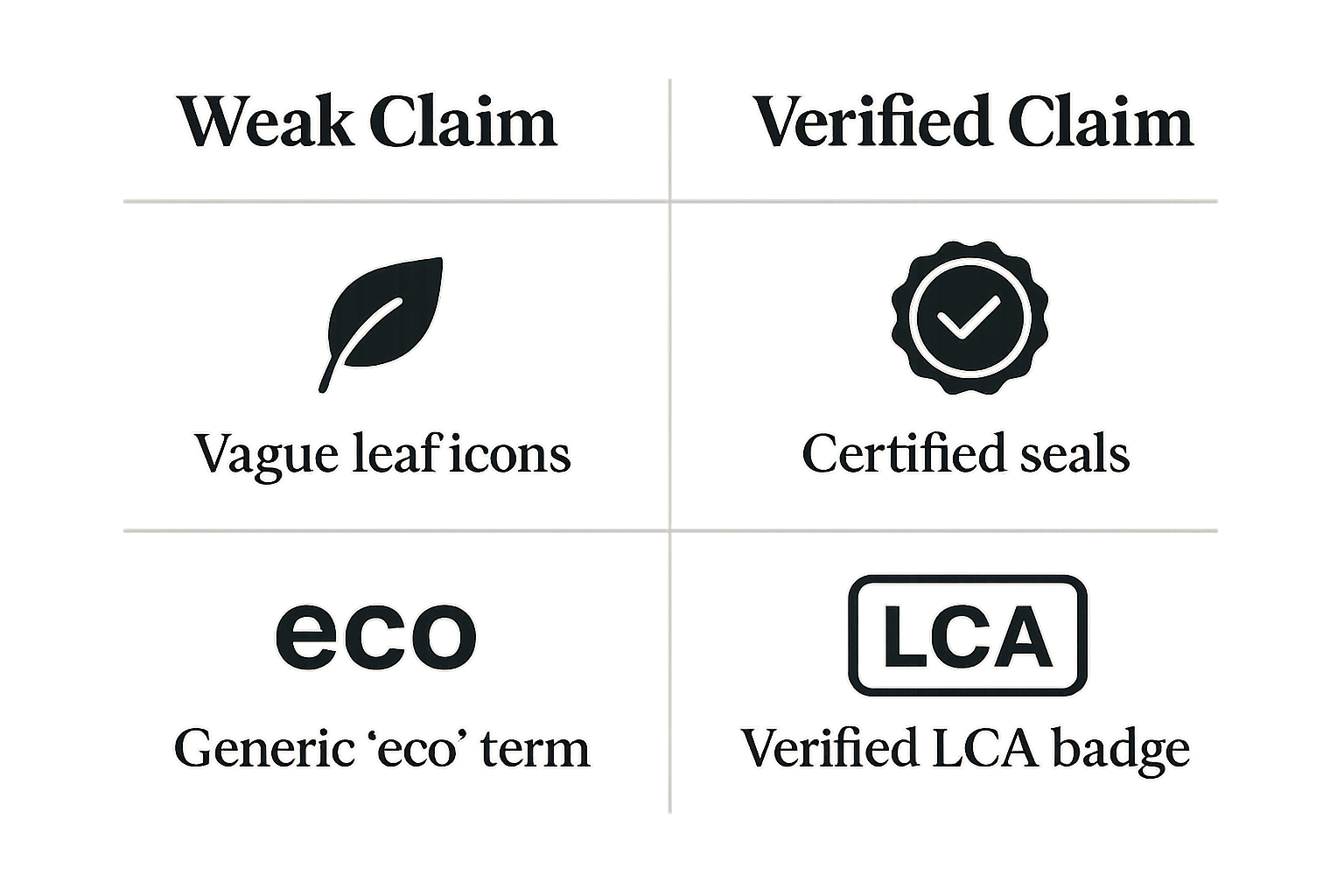
| Generic eco claims (“eco-friendly”, “green”, “sustainable”) | Concrete metrics, scope boundaries, functional unit; otherwise avoid—this aligns with a generic environmental claims ban. |
| Product attribute (“packaging 95% recycled paper”) | Supplier attestations + test reports; chain-of-custody; date-stamped specs; public method page. |
| Comparative (“35% less CO₂ than 2022 model”) | Same system boundaries; baseline year; LCA method; uncertainty; link to full method. See comparative claims policy. |
| Improvement over time (“now 50% less water”) | Year-on-year data series; controls for volume mix; external review where material. |
| Climate (“carbon neutral” or “net zero”) | Prioritize reductions; disclose scopes; residual offsets quality; no “neutral” if offsets only. See carbon claims guidance. |
Green Claims Directive vs ECGT: what actually applies today
ECGT Directive targets misleading sustainability information in consumer protection law—banning vague catch-all claims and fabricated labels, and requiring clarity around durability and repairability. The (paused) GCD would have gone deeper on methods, verification, and documentation.
Bottom line: even without GCD, ECGT plus existing unfair commercial practices rules already push you toward specific, verifiable claims with accessible evidence.
Looking for a quick primer? Read our ECGT essentials.
The 30–60 day compliance playbook
Build once, reuse everywhere—tenders, product pages, marketplaces, packaging. This modular system works whether you sell B2C or B2B in the EU.
1) Policy
Publish a short policy defining allowed claims, boundaries (product/packaging/site), prohibited phrases (generic “green”), and renewal cadence. Link it from your footer.
2) Process
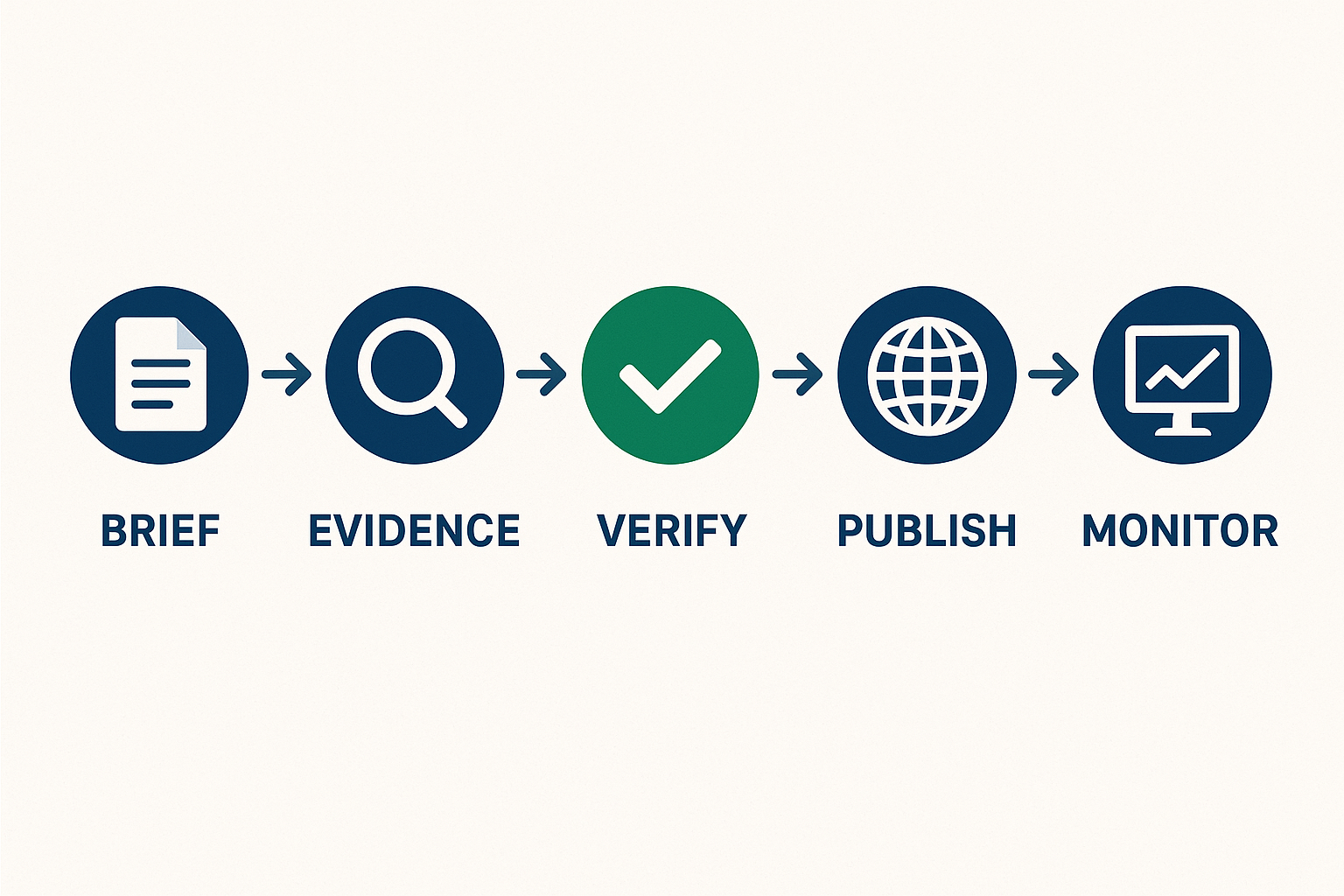
Standard brief → evidence collection → legal review → risk sign-off → disclosure page → monitoring. Version every claim and set expiry dates.
3) Proof
Create a “substantiation file” template with functional unit, baseline, data sources, method notes, and a reviewer’s sign-off. Host a public summary page per claim.
4) Governance
RACI for Marketing, Sustainability, Legal. Record who approved what, when, and why. Capture change history.
| Claim statement | Minimum evidence | Where to publish |
|---|---|---|
| “Packaging: 95% recycled paper (FSC)” | Supplier documentation, FSC CoC, test report, date stamp | Product page; PDF evidence via QR; substantiation file |
| “35% less CO₂ than 2022 model” | Consistent system boundaries; LCA method; baseline dataset | Landing page with method summary; full method on evidence page |
| “Made with renewable energy” | Guarantees of Origin or PPAs; time-matching; site coverage | Operations sustainability page; procurement appendix |
| “Carbon neutral delivery” | Reduction plan first; residual offsets quality and retirement IDs | Dedicated climate claims page; label on checkout with link |
7-step quick checklist
- Scope every claim (what’s in/out).
- Choose a method (LCA perspective where relevant).
- Collect and date evidence; record sources.
- Require third-party verification environmental claims for high-impact messages.
- Publish a plain-language method summary and link it from the claim.
- Set review/expiry dates; monitor for changes.
- Train teams; ban generic claims and homemade badges.
High-risk zones to handle with care
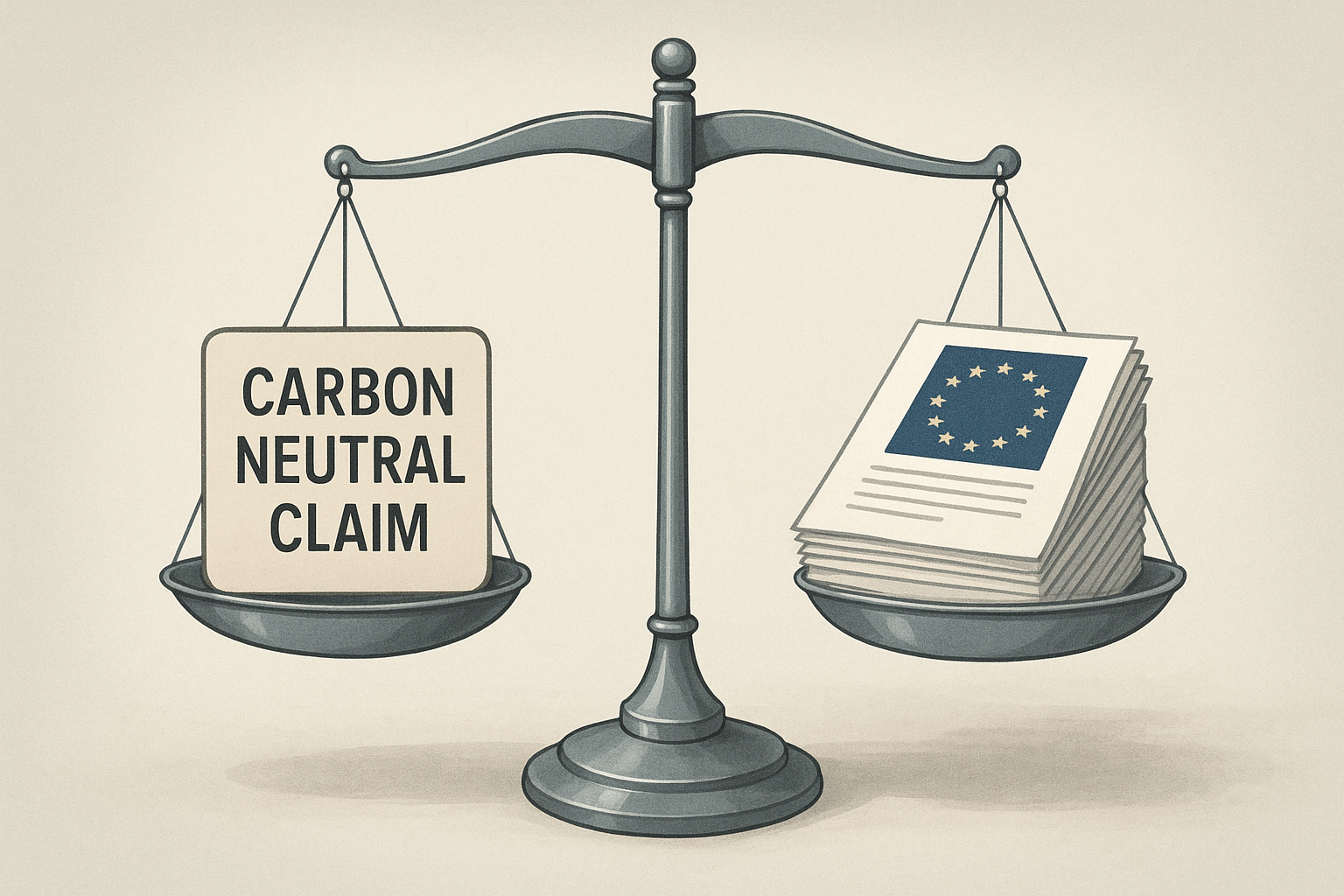
- Carbon neutral claims regulation: avoid neutrality language unless reductions are primary and residual offsets are disclosed and high-quality.
- Comparative ads: ensure equal boundaries, baselines, and datasets.
- Sweeping brand-level claims: break into product/site claims with evidence.
Need a policy template? Download our carbon claims policy starter.
If the law returns: Green Claims Directive implementation timeline
Had it passed in 2025, Member States would likely have had 18–24 months to transpose, with full compliance around 2027—typical for Member States Green Claims transposition. If a new proposal emerges, assume a similar cadence. Either way, the playbook above future-proofs you.
Want deeper context on the legislative journey? Read our overview of Green Claims Directive trilogue negotiations.
Conclusion: build once, comply everywhere

The Green Claims Directive business impact is already here—through buyer expectations, ECGT, and national enforcement. A robust claims program gives you speed, safety, and trust. Start with the 7-step checklist, publish your methods, and keep your files audit-ready.
Next step: Save our Claims Program Policy template, Substantiation File SOP, and ECGT quick guide to operationalize this playbook.
Related resources
- How to substantiate environmental claims EU (How to substantiate environmental claims EU)
- Environmental marketing compliance EU (Environmental marketing compliance EU)
- EU anti-greenwashing legislation overview (EU anti-greenwashing legislation)