
What is ESG? Your Complete Guide to Environmental, Social, and Governance
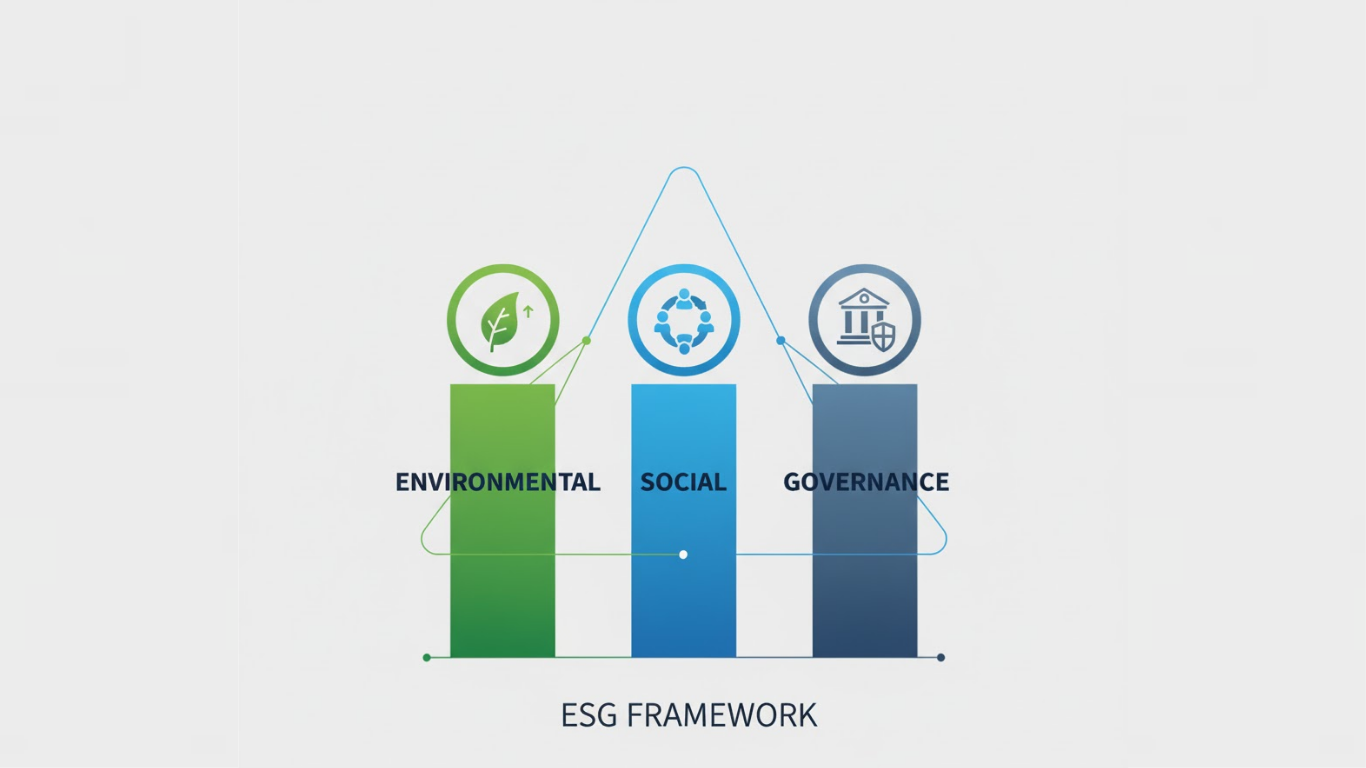
The ESG framework integrates environmental stewardship, social responsibility, and corporate governance into a comprehensive approach to sustainable business.
🌱 Key Takeaways
- ESG stands for Environmental, Social, and Governance—a framework for evaluating organizational sustainability
- ESG goes beyond financial metrics to assess long-term value creation and risk management
- Environmental factors include climate impact, resource management, and pollution control
- Social criteria evaluate labor practices, human rights, diversity, and community relations
- Governance focuses on leadership, ethics, transparency, and stakeholder rights
- ESG investing has grown to over $30 trillion globally, transforming capital markets
If you've been paying attention to the business world lately, you've probably heard the acronym ESG tossed around in boardrooms, investor calls, and sustainability conferences. But what exactly does ESG mean, and why has it become such a defining concept for modern business? Here's the thing: ESG isn't just another corporate buzzword destined to fade. It represents a fundamental shift in how we evaluate organizational success—moving beyond profit margins to consider environmental stewardship, social responsibility, and ethical governance.[49][50]
The acronym stands for Environmental, Social, and Governance—three pillars that together create a holistic framework for assessing how companies manage their impacts on the planet, their relationships with people, and their internal decision-making structures. What makes ESG powerful is that it acknowledges a truth many traditional investors ignored for decades: long-term financial performance is inseparable from sustainability and ethics.[52][54]
For businesses operating in Europe, understanding ESG has moved from optional to essential. The EU's Corporate Sustainability Reporting Directive (CSRD) is making ESG disclosure mandatory for thousands of companies. Investors are scrutinizing ESG performance before allocating capital. Customers are demanding transparency about environmental and social impacts. And talent—especially younger professionals—increasingly wants to work for organizations aligned with their values.[55][56]
What Does ESG Stand For and What Does It Mean?
Let's start with the basics. ESG stands for Environmental, Social, and Governance. But it's more than just three categories—it's a comprehensive framework for evaluating how organizations operate beyond traditional financial metrics. Think of ESG as a lens through which stakeholders can assess an organization's commitment to sustainable and ethical practices.[49][52]
The term gained prominence in the early 2000s, particularly after the 2006 UN Principles for Responsible Investment report, which encouraged investors to incorporate ESG factors into their decision-making. Since then, it has evolved from a niche concept embraced by socially responsible investors to a mainstream framework influencing trillions of dollars in capital allocation.[53][56]
What distinguishes ESG from earlier concepts like corporate social responsibility (CSR) is its focus on measurable, material factors that directly impact financial performance and risk. ESG criteria aren't just about being a "good corporate citizen"—they're about identifying risks and opportunities that traditional financial analysis might miss. A company with poor environmental practices faces regulatory risks. One with weak governance structures might experience scandals that destroy shareholder value. Organizations ignoring social factors may struggle with talent retention or face consumer backlash.[52][54]
The Origins of ESG
While the term ESG was popularized in 2004 through a UN Global Compact initiative, the concept of considering non-financial factors in investment decisions has deeper roots. Environmental and social investment screening dates back to the 1960s and 1970s, often tied to movements divesting from apartheid South Africa or tobacco companies. ESG formalized and expanded these efforts into a comprehensive analytical framework.[56]
The Three Components of ESG
To truly understand ESG, we need to break down each pillar. While they're often discussed separately, remember that they're interconnected—strong performance in one area supports the others, while weakness in one can undermine the whole framework.[51][52]
Environmental: Managing Impact on the Planet
The Environmental pillar examines how an organization interacts with the natural world. This includes its carbon footprint, energy consumption, waste management, water usage, and impact on biodiversity. In today's climate-conscious world, environmental performance has moved from peripheral concern to core business risk.[49][52]
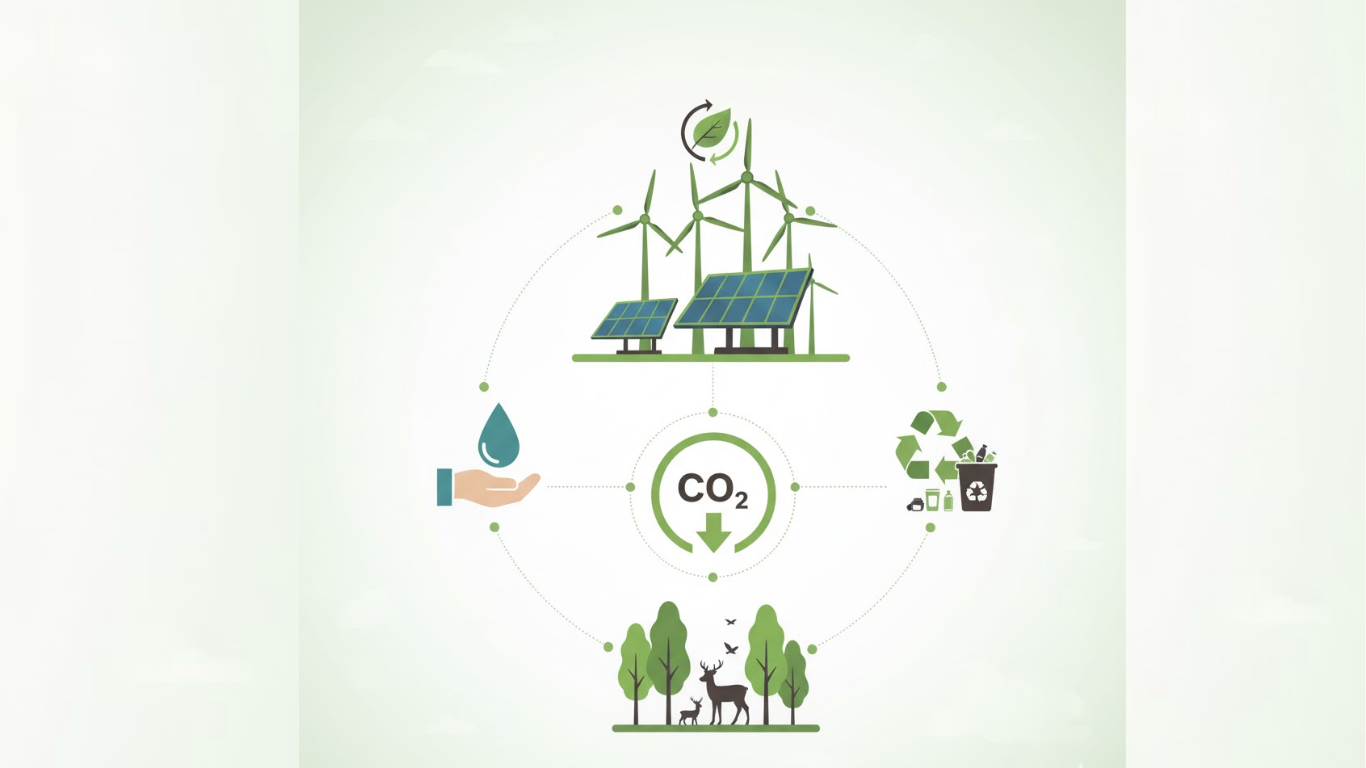
Environmental criteria in ESG frameworks evaluate climate impact, resource efficiency, and ecosystem protection.
Key environmental factors include climate change mitigation and adaptation strategies, greenhouse gas emissions across Scopes 1, 2, and 3, renewable energy adoption and energy efficiency measures, water conservation and wastewater management, waste reduction and circular economy practices, biodiversity protection and land use, and pollution control including air and water quality.[49][51][52]
For European companies, environmental performance has particular significance due to stringent regulations like the EU Green Deal, carbon pricing mechanisms, and the EU Taxonomy for sustainable activities. Companies with strong environmental practices often find themselves better positioned for the transition to a low-carbon economy, while those lagging face increasing regulatory and market pressures.[55]
Social: People and Relationships
The Social pillar focuses on how organizations manage relationships with employees, suppliers, customers, and communities. It encompasses labor practices, human rights, diversity and inclusion, health and safety, and community impact. In essence, it asks: how does this organization treat people?[51][52][54]
Social factors are increasingly recognized as material to business success. Companies with poor labor practices face reputational damage, regulatory penalties, and difficulty attracting talent. Those ignoring diversity miss out on innovation and market insights. Organizations that neglect community relations may encounter opposition to their operations.[54][55]
Governance: Leadership and Ethics
The Governance pillar examines how organizations are led and controlled. This includes board composition and independence, executive compensation structures, shareholder rights, business ethics and anti-corruption measures, risk management systems, and transparency in disclosure.[52][54]

Social and governance pillars of ESG evaluate how organizations treat people and how they're managed.
Strong governance isn't just about avoiding scandals—it's about creating structures that enable effective decision-making, accountability, and long-term value creation. Investors increasingly view governance as foundational: even companies with strong environmental and social performance can't be trusted if their governance is weak.[52][56]
| ESG Pillar | Key Focus Areas | Why It Matters |
|---|---|---|
| Environmental[49][52] | Climate, energy, water, waste, biodiversity | Regulatory compliance, resource efficiency, climate risk management[55] |
| Social[51][54] | Labor, human rights, diversity, safety, community | Talent attraction, reputation, license to operate[54] |
| Governance[52][56] | Board structure, ethics, transparency, risk management | Accountability, decision quality, stakeholder trust[56] |
Why is ESG Important for Businesses and Investors?
The rise of ESG isn't driven by altruism alone—it's rooted in practical business logic. Organizations and investors embracing ESG criteria are discovering tangible benefits that justify the effort and resources required.[52][54][56]
Risk management is perhaps the most compelling reason for ESG integration. Environmental risks like climate change, water scarcity, and resource depletion pose real threats to business continuity. Social risks including labor disputes, human rights violations, and community opposition can disrupt operations. Governance failures lead to scandals, regulatory penalties, and destroyed shareholder value. ESG analysis helps identify and mitigate these risks before they materialize.[52][54]
Regulatory compliance is increasingly unavoidable. Europe is leading the world in mandatory ESG disclosure requirements. The CSRD requires detailed sustainability reporting from thousands of companies. The EU Taxonomy defines what counts as environmentally sustainable. Failure to comply brings legal risks and potential market exclusion.[55]
Access to capital increasingly depends on ESG performance. Institutional investors managing trillions of dollars now integrate ESG criteria into their investment processes. Companies with poor ESG ratings may find capital more expensive or unavailable. Those with strong ESG performance often enjoy lower costs of capital and broader investor interest.[53][56]
Operational efficiency often improves through ESG initiatives. Energy efficiency reduces costs. Waste reduction saves money. Better employee relations increase productivity. Sustainable supply chain management reduces risks and can lower costs. Many organizations discover that sustainability and profitability aren't opposing forces—they're complementary.[54][55]
Reputation and brand value benefit from strong ESG performance. Consumers, particularly younger generations, increasingly consider environmental and social factors in purchasing decisions. Employees want to work for organizations aligned with their values. Communities prefer businesses that contribute positively. Strong ESG performance builds trust and loyalty.[54][56]
ESG Investing: How It Works
The investment landscape has been transformed by ESG investing. What started as a niche approach embraced by values-driven investors has become mainstream, with global sustainable investment now exceeding $35 trillion according to the Global Sustainable Investment Alliance.[53][56]
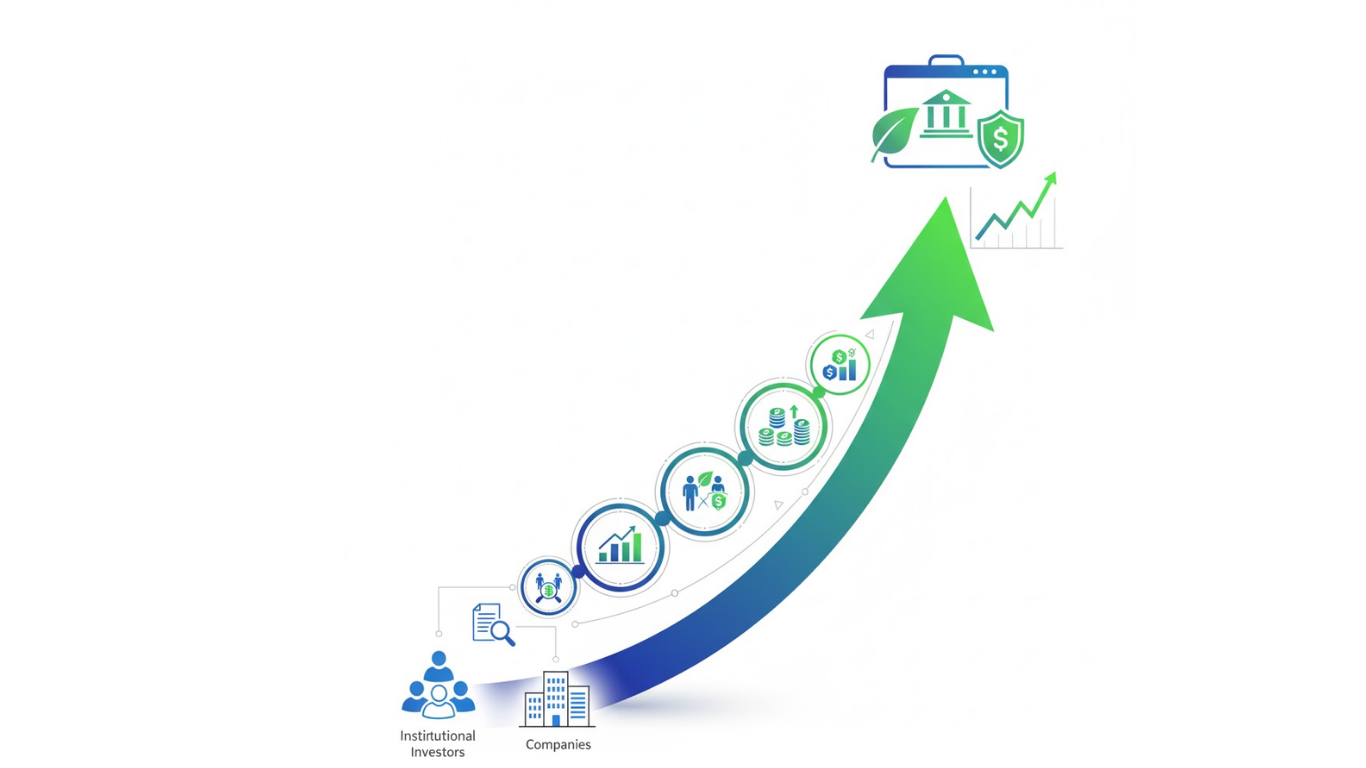
ESG investing has grown exponentially as investors recognize the financial materiality of environmental, social, and governance factors.
ESG investing integrates environmental, social, and governance factors into investment analysis and decision-making. But it's not a single approach—it encompasses several strategies:[53][56]
Negative screening excludes companies or sectors based on ESG criteria. This might mean avoiding fossil fuels, tobacco, weapons, or companies with poor labor practices. It's the oldest form of ESG investing, dating back to faith-based investment strategies.[53]
Positive screening or "best-in-class" investing selects companies with leading ESG performance within their sectors. Rather than excluding entire industries, it identifies companies managing ESG issues better than peers.[53][56]
ESG integration systematically includes ESG factors in traditional financial analysis. Investors assess how environmental, social, and governance issues might affect a company's financial performance and risk profile. This is increasingly the default approach for institutional investors.[53][56]
Impact investing targets investments that generate measurable social or environmental benefits alongside financial returns. This goes beyond avoiding harm or selecting ESG leaders—it actively seeks positive impact.[53]
Active ownership involves using shareholder influence to improve corporate ESG performance through engagement, dialogue, and proxy voting. Many institutional investors now actively engage with portfolio companies on ESG issues.[53][56]
Does ESG investing sacrifice returns? The evidence increasingly suggests no. Multiple studies have found that ESG integration is associated with equal or better financial performance compared to traditional approaches. Companies with strong ESG performance often demonstrate better risk management, operational efficiency, and long-term thinking—qualities that translate to financial success.[56]
How Companies Measure and Report ESG Performance
Measuring ESG performance requires moving beyond traditional financial accounting to capture environmental, social, and governance impacts. This isn't always straightforward—unlike financial metrics with standardized definitions, ESG measurement is still evolving.[52][54]

Effective ESG reporting requires robust data collection, meaningful metrics, and transparent disclosure aligned with recognized frameworks.
Companies typically measure ESG performance using specific metrics and KPIs tailored to their industry and material issues. Environmental metrics might include carbon emissions intensity, renewable energy percentage, water usage per unit of production, or waste diversion rates. Social metrics could cover employee turnover, workplace injury rates, diversity statistics, or community investment. Governance metrics might track board independence, executive pay ratios, or ethics hotline reports.[52][54][55]
To ensure consistency and comparability, many organizations align their ESG reporting with established frameworks. The Global Reporting Initiative (GRI) provides comprehensive standards for sustainability disclosure. The Sustainability Accounting Standards Board (SASB) offers industry-specific materiality standards. The Task Force on Climate-related Financial Disclosures (TCFD) focuses on climate risk. In Europe, the European Sustainability Reporting Standards (ESRS) are becoming mandatory under CSRD.[52][55]
The reporting process typically involves several steps: conducting a materiality assessment to identify significant ESG topics, establishing data collection systems and processes, selecting appropriate metrics and frameworks, gathering and verifying data (often with external assurance), and preparing and publishing sustainability reports or integrated reports.[54][55]
Technology is playing an increasing role in ESG measurement. Software platforms help companies collect, manage, and analyze ESG data. Artificial intelligence assists in processing vast amounts of information. Blockchain technology promises to improve supply chain transparency. As ESG reporting becomes more sophisticated and regulated, these tools are becoming essential.[55]
The Materiality Assessment
A crucial step in ESG reporting is the materiality assessment—the process of identifying which ESG issues are most significant to your organization and stakeholders. This isn't about reporting everything; it's about focusing on what truly matters. European companies must now conduct double materiality assessments under CSRD, examining both how ESG issues affect the company and how the company affects society and the environment.[55]
How Does ESG Differ from Sustainability and CSR?
People often use ESG, sustainability, and CSR (Corporate Social Responsibility) interchangeably, but they're distinct concepts with different emphases and applications. Understanding these differences helps clarify what ESG brings to the table.[52][54][63]
Sustainability is the broadest concept—it's a philosophy about meeting present needs without compromising future generations' ability to meet theirs. It encompasses environmental protection, social equity, and economic viability. Sustainability is about long-term thinking and systemic balance. It's more of a guiding principle than a specific framework.[63]
Corporate Social Responsibility (CSR) refers to voluntary actions companies take to improve their social and environmental impact. CSR often emphasizes philanthropy, community engagement, and ethical business practices. It's typically internally driven and focused on reputation and stakeholder relationships. CSR activities might include charitable donations, volunteer programs, or community development initiatives.[52][54]
ESG, in contrast, is a structured framework for measuring and evaluating specific environmental, social, and governance factors that have material impact on business performance and risk. ESG is more data-driven, standardized, and investment-focused than CSR. It's increasingly mandatory rather than voluntary, especially in Europe. ESG emphasizes measurable metrics and external accountability.[52][54][56]
| Concept | Primary Focus | Key Characteristics |
|---|---|---|
| Sustainability[63] | Long-term balance of environmental, social, economic systems | Philosophical framework, holistic, future-oriented[63] |
| CSR[52][54] | Voluntary social and environmental responsibility | Reputation-focused, philanthropic, community-oriented[54] |
| ESG[52][56] | Measurable environmental, social, governance criteria | Investment-driven, standardized, increasingly mandatory[55][56] |
Think of it this way: sustainability is the destination, CSR is one approach to getting there, and ESG is the measurement system that tells you how well you're progressing. All three matter, but they serve different purposes and audiences.[52][63]
ESG Integration in Corporate Strategy
The most successful organizations don't treat ESG as a compliance exercise or public relations campaign—they integrate it into core business strategy. This means embedding environmental, social, and governance considerations into decision-making at all levels.[54][56]
Strategic ESG integration starts at the top. Board oversight of ESG issues signals their importance and ensures accountability. Many companies now have board committees focused on sustainability or ESG. Executive compensation increasingly includes ESG performance metrics, aligning leadership incentives with sustainability goals.[52][56]
Stakeholder engagement is central to effective ESG strategy. This means regular dialogue with investors, employees, customers, suppliers, communities, and civil society organizations. Their input helps identify material issues, shape priorities, and build trust. Companies that engage stakeholders effectively are better positioned to anticipate challenges and opportunities.[54][55]
Risk management processes must incorporate ESG factors. Climate risk, for example, can affect physical assets, supply chains, and market demand. Social risks like labor disputes or human rights violations can disrupt operations and damage reputation. Governance weaknesses create vulnerability to scandals and regulatory problems. Effective risk management requires systematically assessing ESG risks alongside traditional business risks.[52][54]
Innovation and value creation increasingly flow from ESG integration. Companies developing sustainable products and services tap growing markets. Those improving resource efficiency reduce costs. Organizations attracting top talent through strong ESG performance gain competitive advantages. ESG isn't just about avoiding harm—it's about creating value.[54][56]
Frequently Asked Questions About ESG
What does ESG stand for and what does it mean?
ESG stands for Environmental, Social, and Governance. It represents a holistic framework that evaluates how organizations manage environmental impact, social relationships with stakeholders, and governance structures, extending beyond traditional financial metrics to assess long-term sustainability and ethical business practices.[49][52]
Why is ESG important for businesses and investors?
ESG is important because it helps businesses manage risks, improve operational efficiency, meet regulatory requirements like CSRD, attract investment, and build stakeholder trust. For investors, ESG criteria provide insights into long-term value creation and sustainability risks that traditional financial analysis might miss.[52][54][56]
What are the three components of ESG?
The three components of ESG are: Environmental (climate change, resource management, pollution control), Social (labor practices, human rights, diversity, community relations), and Governance (board structure, executive compensation, business ethics, shareholder rights).[51][52][57]
How do companies measure and report ESG performance?
Companies measure ESG performance using specific metrics and KPIs aligned with frameworks like GRI, SASB, TCFD, and ESRS. They collect data on environmental impacts, social practices, and governance structures, then report this information through sustainability reports, integrated reports, or mandatory disclosures required by regulations like CSRD.[52][54][55]
What is ESG investing and how does it work?
ESG investing integrates environmental, social, and governance factors into investment decisions. It works through various approaches including negative screening (excluding harmful industries), positive screening (selecting ESG leaders), ESG integration (incorporating ESG analysis into traditional financial analysis), and impact investing (targeting measurable social/environmental outcomes alongside financial returns).[53][56]
How does ESG differ from sustainability and CSR?
ESG is a measurable framework with specific criteria and metrics used primarily for investment analysis and corporate reporting. Sustainability is a broader philosophy about long-term environmental and social balance. CSR (Corporate Social Responsibility) focuses on voluntary philanthropic activities and community engagement. ESG is more structured, data-driven, and increasingly mandatory through regulations.[52][54][63]
What are the key environmental factors in ESG?
Key environmental factors in ESG include climate change and carbon emissions, energy efficiency and renewable energy use, water management and conservation, waste management and circular economy practices, biodiversity and ecosystem protection, pollution control, and sustainable resource management.[49][51][52]
What social criteria are evaluated in ESG frameworks?
Social criteria in ESG frameworks evaluate labor practices and working conditions, human rights throughout the value chain, diversity, equity and inclusion, health and safety standards, community relations and impact, customer privacy and data protection, product safety and quality, and supply chain labor standards.[51][52][54]
What does governance mean in the context of ESG?
Governance in ESG refers to how a company is led and controlled. It includes board composition and independence, executive compensation alignment with sustainability goals, business ethics and anti-corruption measures, shareholder rights and stakeholder engagement, risk management and internal controls, transparency and disclosure practices, and compliance with laws and regulations.[52][54][56]
How do ESG criteria impact investment decisions?
ESG criteria impact investment decisions by providing non-financial indicators of risk and opportunity. Investors use ESG data to assess long-term sustainability, identify potential regulatory risks, evaluate management quality, understand stakeholder relationships, and align investments with values. Strong ESG performance often correlates with better risk management and long-term financial performance.[53][56][58]
References and Sources
- ClimatePartner. "Environmental, Social, and Governance (ESG)." ClimatePartner, October 2022.
- IBM. "What is Environmental, Social, and Governance (ESG)?" IBM Think, January 2024.
- Chandra Asri. "Understanding ESG, Its Components, and the Benefits." Chandra Asri, January 2025.
- Corporate Finance Institute. "ESG (Environmental, Social, & Governance)." CFI, November 2025.
- CFA Institute. "What is ESG Investing?" CFA Institute, November 2025.
- British Business Bank. "What is ESG? A Guide for Businesses." British Business Bank, March 2024.
- Tanso. "What does ESG mean? (Environmental Social Governance)." Tanso, January 2025.
- IMD. "ESG: Environmental, Social, & Governance Investing Explained." IMD, October 2025.
- 6clicks. "What are the three components of ESG?" 6clicks, November 2025.
- Investopedia. "Environmental, Social, and Governance (ESG) Investing." Investopedia, 2025.
- Jaggaer. "The Three Pillars of Sustainability Explained." Jaggaer, October 2025.
- SlideModel. "Circular ESG PowerPoint Diagram Template." SlideModel, May 2025.
- Key ESG. "ESG Reporting Examples: Top Insights in 2025." Key ESG, June 2025.
- LinkedIn. "The Three Pillars of ESG Infographic." LinkedIn, 2023.
- Green Business Benchmark. "What Is ESG and Why It Matters for Your Business." Green Business Benchmark, September 2024.